

October 16, 2024
How to Pace and Execute a Marathon
Learn more


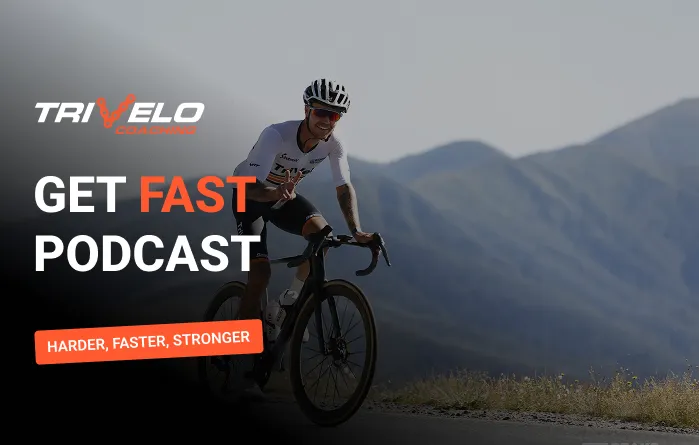
Get Fast Podcast, Ep 39, with Gerard and Jordan Donnelly
You can be, if you build a strong base, keep your form simmering and manage your fatigue. Then know your numbers and race smart, because Gerard says the person who makes "the least amount of mistakes" is probably the one who wins.
It means fitness you can hold, without chasing a peak. Jordan's summary is to keep your motivation up, avoid overtraining, "build a really good base and be ready to race at any time".
A day will come when you put a number on. Will you be happy looking back at your preparation? You either follow a plan with your head down, or go through the motions and hope everyone else did the same.
Let your fatigue come down regularly. Fitness, fatigue and form are tied together, and as fitness rises, so does fatigue. Keep piling it on and your form goes backwards.
Fitness drops more slowly than fatigue. Two or three easy days clear a lot of fatigue, and in Gerard's example your fitness might only drop from 80 to 78. That's how you keep form simmering underneath, ready to lift quickly.
Yes. Indoor riding gives you intensity, pressure on the pedals and unpredictable racing on Zwift. It's also very fatiguing, especially endurance sessions. Do too much and you go stale and start to lose form.
Gerard now gives "a lot more recovery than I ever have as a coach". Some athletes question it. Even at pro level, some riders have done too much and some not enough.
Because a race can end with a solo attack. Critical power is your best power for a given time, and TriVelo riders know theirs.
Say you break away with 5km to go, and that could take eight minutes. Your critical power for eight minutes tells you what to ride.
Numbers don't replace racing. Gerard isn't suggesting you let a move go because it's over your number. "You have to still race." Without the information, though, you're more likely to make a poor decision.
You can't cover them all, so read who's in the bunch. At your club, you know the riders:
React quickly. You have two or three seconds before a 30-metre gap can't be bridged. In a bigger race, do your homework on who's winning state and club races.
Position matters too. Gerard hides behind the rider he's most worried about. "I don't want the person I'm most worried about behind me."
Yes. Sunweb sent riders one after another in a Tour stage. When one came back, the next launched, and the team won. As Gerard says, "you never know when it's going to work". You can cover 10 attacks, miss the 11th, and that's the one that stays away.
It depends on your goal. In a stage race, if your overall placing matters, limit your losses. In Gerard's example, following an attack into the red could cost you five minutes, and holding a steady tempo might cost one.
If you only want a stage win, delay your attack until everyone is hurting the most.
Talk it through afterwards. Gerard asks athletes why they did something at a particular point, and often they don't know the purpose. That makes them rethink the good and bad sections of their race.
Then fix what repeats. Richie Porte lost time in crosswinds two years running through poor positioning, and Gerard's reminder is that "every second counts in every race you do".