

October 16, 2024
How to Pace and Execute a Marathon
Learn more


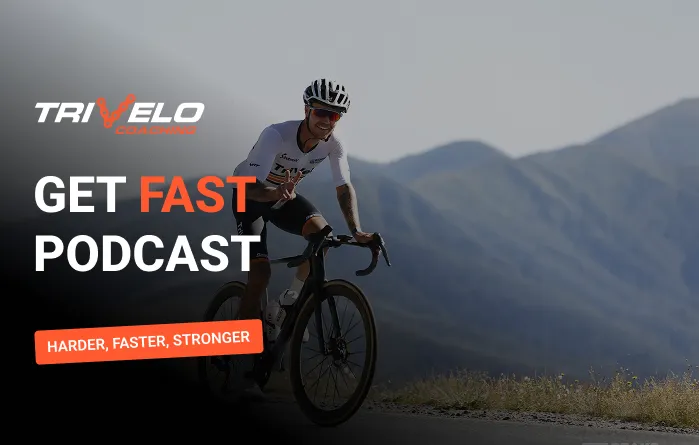
Get Fast Podcast, with Gerard and Jordan Donnelly and guest Mat Hayman, Paris-Roubaix winner
Mat Hayman won Paris-Roubaix after breaking his arm in the lead-up, and he says he was never certain he'd even start. He describes good and bad days, a coach who kept telling him his form was holding, and a race he rode fresh and without pressure. He's one of only two Australians to have won it.
No. Mat says people assume he knuckled down on a set plan once he broke his arm, and "that couldn't be further from the truth". He wanted to stay fit, with Roubaix in his head, but "there was no certainty I was going to make it".
He turned to indoor training on Zwift. Some days he didn't touch the bike. He remembers walking into the kitchen after a double session and asking his wife what he was doing, when he didn't even know if he'd be racing.
Accept the bad days. Mat's advice is "don't be too hard on yourself" when you're struggling for motivation, and know that it will swing around. If you get too many bad days in a row, talk to your coach.
He gave similar advice as a director at Mitchelton-Scott, when the coronavirus lockdown took racing away from his riders. He wanted them keeping structure, like getting up and dressed as if it was a normal day. Uncertainty, he says, is "not something that we deal with very well as humans". So replace the race with a clear aim for your training, even if that aim isn't race fitness.
Usually, yes. Mat says "sometimes the best thing is to drag yourself onto the bike". You might find halfway through that a lot of it was in your head.
Even if you don't hit your numbers, he says "you do feel so much better" once it's done. There are also times to give yourself a break, and that's worth talking through with a coach.
After a few of the sessions, Mat's coach could see he was holding his form. He kept repeating that to Mat and became the driving force towards Roubaix.
Mat still lacked confidence, because he'd missed the races he thought he needed. His coach wrote to him saying he should be confident in where he was at, and that his numbers were really good.
Mat puts it down to freshness, both physical and mental. He says most riders struggle through the Classics period. They're in Belgium for three and a half weeks, "receiving a kicking most weeks", then have to come back and do it again.
Mat "came in super fresh", with the experience to know what the race was about.
In earlier years Mat told himself it had to happen that day, and he was super critical of every mistake. This time he felt like "going back to that race as a young kid again". He calls it "a really liberating way" to ride.
Mat says riders have "the normal doubts that anybody has". He worried all race that he hadn't done the distance, and kept waiting for "when the wheels were going to fall off". They never did.
Experience helped him. In 2011 he opened up too early and got too excited. In the same position again, he remembered he had to "keep a lid on this", because even when you feel good, it's a long way.
He wants more connection with his riders, and less time looking at files and data. His riders range from 21-year-olds on a first professional contract to riders close to retirement, so he looks at what support each person needs.